
(Iridescent 03) 12 pcs Butterfly Rhinestone Charm for Nails Art Designer is a mixed multichrome-and-opal resin set of faceted butterfly charms with small clear rhinestone centers.
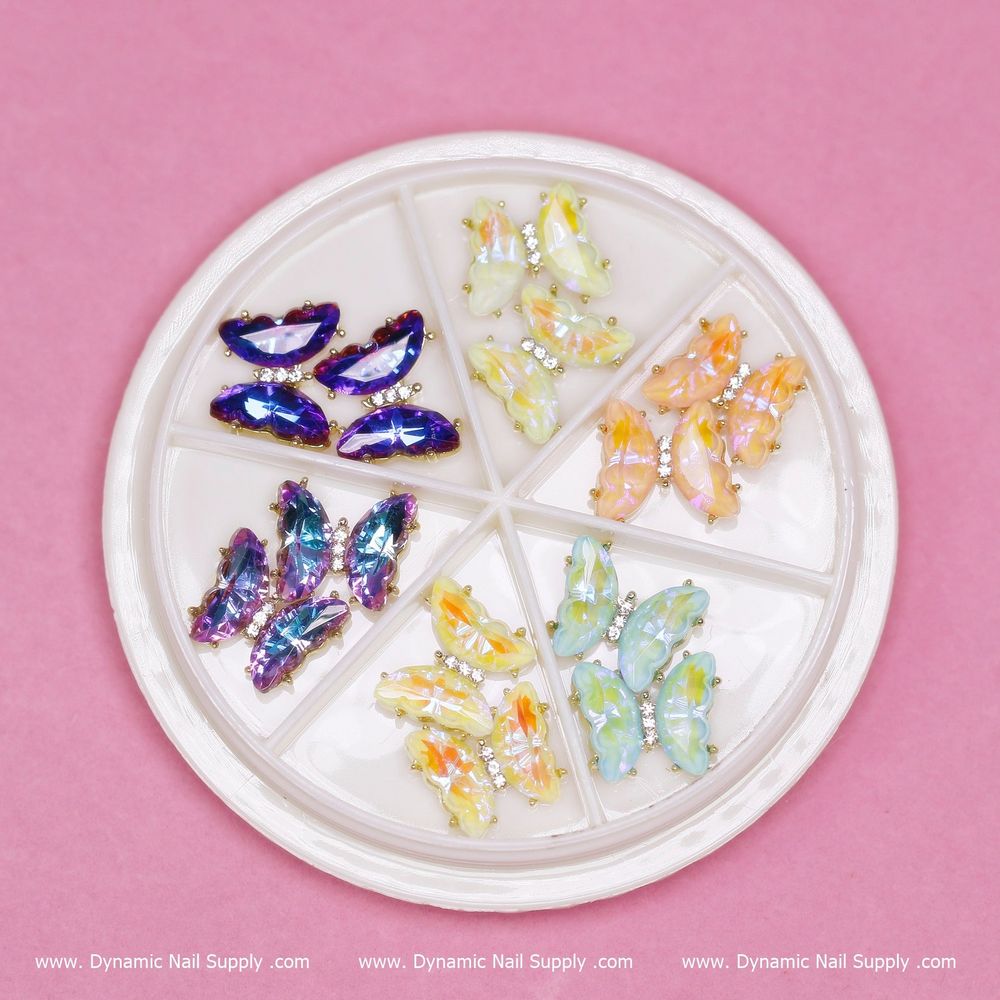
Mixed multichrome and opal faceted butterfly charms
Key takeaways
- Use low-alcohol or phenolic disinfectants at controlled contact times; avoid strong solvents and soaking.
- Clean mechanically first with soft tools, then apply a brief disinfectant exposure to protect finish and pavé centers.
- Dry thoroughly, inspect pavé rows and facets under light, and retire any damaged pieces for hygiene.
- Store in padded, segmented trays to prevent rubbing and preserve iridescence between services.
Sanitize iridescent nail charms: quick salon rationale
You need a repeatable, chairside-safe workflow that removes oils, glue residue and microbes from faceted iridescent resin butterflies without stripping their gloss or clouding the opalescent surface.
Tools, supplies and conditions to prepare
- Soft-bristled brush (horsehair or micro-brush), lint-free microfiber cloths, and a toothpick or orange wood stick for crevices.
- Low-percentage isopropyl alternatives (70% or lower) or hospital-grade phenolic disinfectant approved for instruments; test one sample before batch use.
- Small shallow trays for rinsing, paper towels, and a hairdryer on cool/low air for drying.
- Magnified inspection lamp and padded segmented storage boxes to return cleaned charms to service-ready organization.
Weddings: when you must protect pristine opalescent accents
Why it matters: bridal sets demand peak shine and perfect pavé centers for macro photos and close-up hand shots.
- Pre-clean: remove surface dust and product residue with a soft brush and microfiber cloth before any liquid contact.
- Disinfect: use a sprayed application of low-alcohol disinfectant onto the cloth, then gently wipe each butterfly—do not soak; maintain a contact time recommended by the disinfectant label (brief wiped contact rather than immersion preserves the finish).
- Rinse alternative: if a rinse is needed, use a quick pass with distilled water in a shallow tray and immediately dry; long exposure dulls opalescent tones.
- Inspect and stage: check rhinestone centers for looseness under light; set aside any with movement for replacement so client photos stay flawless.
Holidays: high-turnover services with festival looks
Why it matters: rapid turnover increases handling; you need fast, reliable sanitizing without extra labor that damages facets or pavé rows.
- Batch approach: pre-brush to remove adhesive fragments, then lay charms in a single layer on a lint-free towel for sprayed disinfection—avoid stacking.
- Avoid heat: do not apply warm water or hot air—heat can expand resin slightly and stress pavé glue joints.
- Quick-dry: use cool-air drying or blot with a microfiber cloth; do a tactile check for dampness before storing back in compartments.
Work: conservative looks for professional clients
Why it matters: clients who wear subtle opal pastels expect durable, well-sanitized accents that won’t show wear from cleaning or chemical exposure.
- Spot-clean method: when only one or two charms return from a client, use a micro-brush and a drop of disinfectant on the brush to clean gaps and under the rhinestone row.
- Non-abrasive handling: never scrub facets with abrasive tools; light strokes maintain the glossy faceting and colored flashes.
- Documentation: track frequency of reuse per charm—rotate so no single piece is overused and inspected frequently for failure.
Stock reference and ordering line follows for resupply
Vacations: mobile techs and travel-safe cleaning
Why it matters: mobile appointments expose charms to variable temperatures and humidity that can accelerate wear if cleaning is heavy-handed.
- Compact kit: bring a small spray bottle of chosen disinfectant, micro-brushes, a portable magnifier and padded single-layer charm trays.
- No soaking: never immerse these faceted resin butterflies in solvent baths while traveling; carry a damp microfiber for wiped disinfection only.
- Drying and storage: use separate sealed containers for cleaned and used charms to avoid cross-contamination on the road.
Parties: festival and photo-ready maintenance
Why it matters: party clients want bold multichrome purples and pastel opals to read bright; dulling will lose the intended contrast.
- Alternate rotation: reserve the jewel-tone multichrome butterflies for single-service events and use opal pastels for repeated wear when possible.
- Quick-cure protection: after cleaning and placement, add a thin, compatible top layer in the manicure protocol to protect pavé glue joints from sweat and perfumes.
- Post-event check: immediately inspect for loose rhinestones after the event and retire affected charms to avoid spreading debris to other clients.
Step-by-step salon-safe protocol (detailed workflow)
- Initial mechanical clean: use a soft brush to remove dust, dried gel flakes or glue. Work along wing edges and the rhinestone row with a wooden pick only where needed.
- Targeted dissolved residue: for adhesive spots, apply a tiny amount of salon-appropriate remover on a wooden stick—never soak; fast spot treatment loosens glue without saturating the resin.
- Disinfect: spray or apply a low-alcohol disinfectant on a microfiber cloth and wipe each charm once. The action is wipe-clean, not soak. This is the core of how you sanitize iridescent nail charms while protecting their finish.
- Rinse if required: a quick distilled water rinse is allowed only when label directions for your chosen disinfectant call for removal; otherwise skip rinsing to avoid moisture entrapment.
- Dry and inspect: blow-dry on cool/low and inspect under a lamp at 10–15 cm for cracked resin, clouding or loose Pavé centers. Any crack or loosened stone means retire the piece.
- Return to padded trays: place charms in single-layer padded compartments. Label compartments by color group (multichrome vs opal pastels) to avoid unnecessary handling during service.
What to avoid: solvents, ultrasonic, heat and abrasion
- Do not use acetone or high-strength solvents for bulk cleaning—these can etch opalescent sheens and dull faceted resin.
- Avoid ultrasonic cleaners—vibration can loosen tiny rhinestones and stress faceted edges.
- Do not soak in any disinfectant for extended periods; long immersion leads to loss of iridescent flash and possible adhesive breakdown in pavé centers.
- Refrain from aggressive scraping or wire brushes that will scratch gloss and remove surface sheen.
Inspection, retirement criteria and storage workflow
- Inspect after each cleaning; retire any charm with cloudy facets, missing rhinestones, cracked resin, or visible glue migration.
- Log retirement reasons and counts so you can reorder before stock runs low; this set is listed at $8 and prices may change.
- Store cleaned charms in a cool, low-humidity area away from direct sunlight to preserve color flashes and opalescent tones.
Short recap
- Mechanical clean first, disinfect by wiping, never soak.
- Avoid acetone, ultrasound, heat and abrasives.
- Dry, inspect, retire damaged pieces and store padded by color group.
